Paying for top-ups with your card from the Dominican Republic: how your bank converts it
Prices are in dollars and your card is in Dominican peso (DOP). How the conversion works, what to check before paying and what to do if the charge does not go through.
Which cards from the Dominican Republic work here
Dominican cards pay in dollars normally and the bank settles in pesos; it is worth checking the international limit if the card is rarely used abroad.
Dominican digital-banking cards usually let you switch international use on and off instantly, which is the fastest thing to check after a decline.
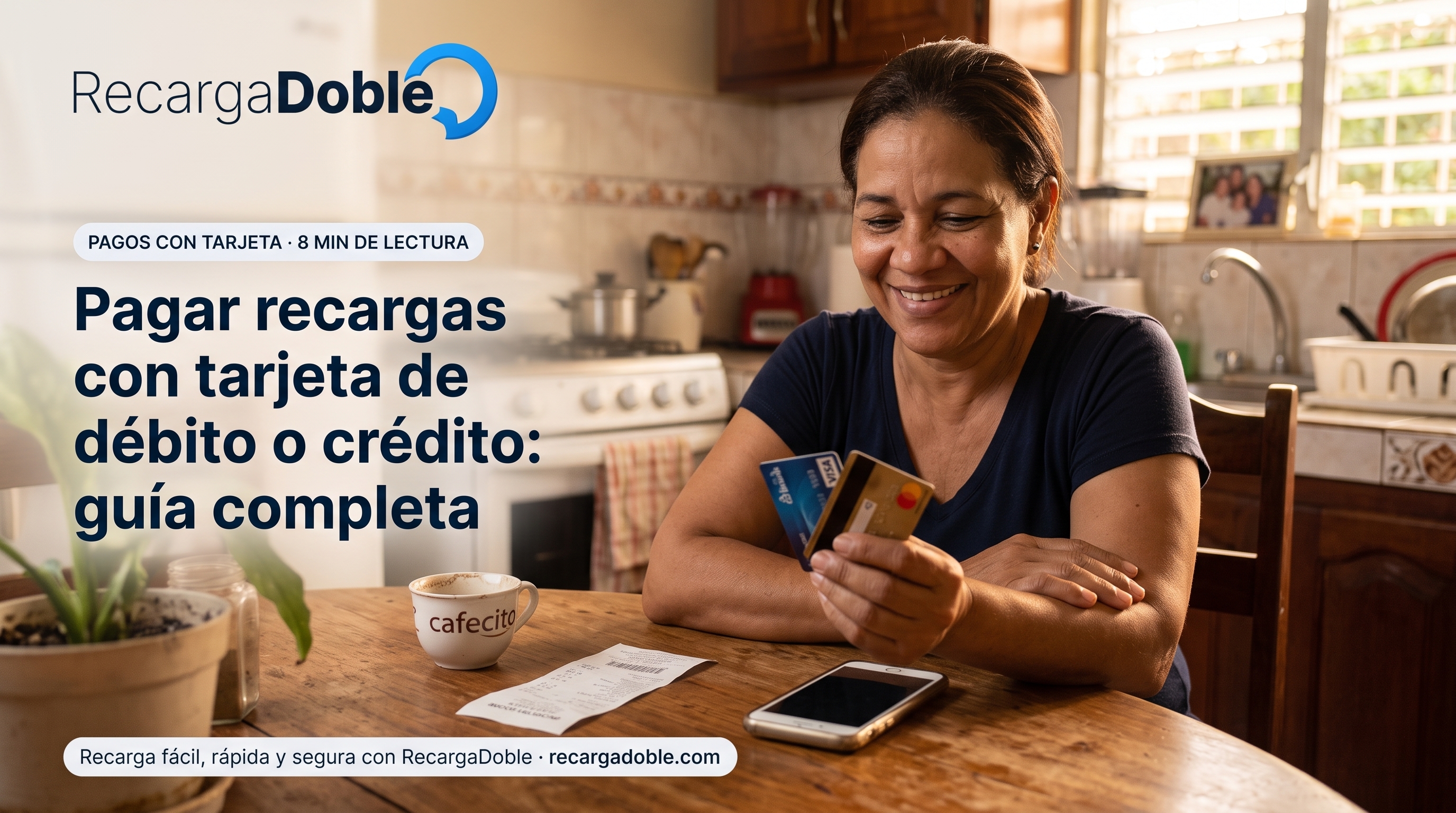
Debit and credit both work, as long as the issuer allows online purchases outside the country. The order is charged once, with the total visible before you confirm: subtotal, taxes where they apply and any processing fee.
Who converts, and at what rate
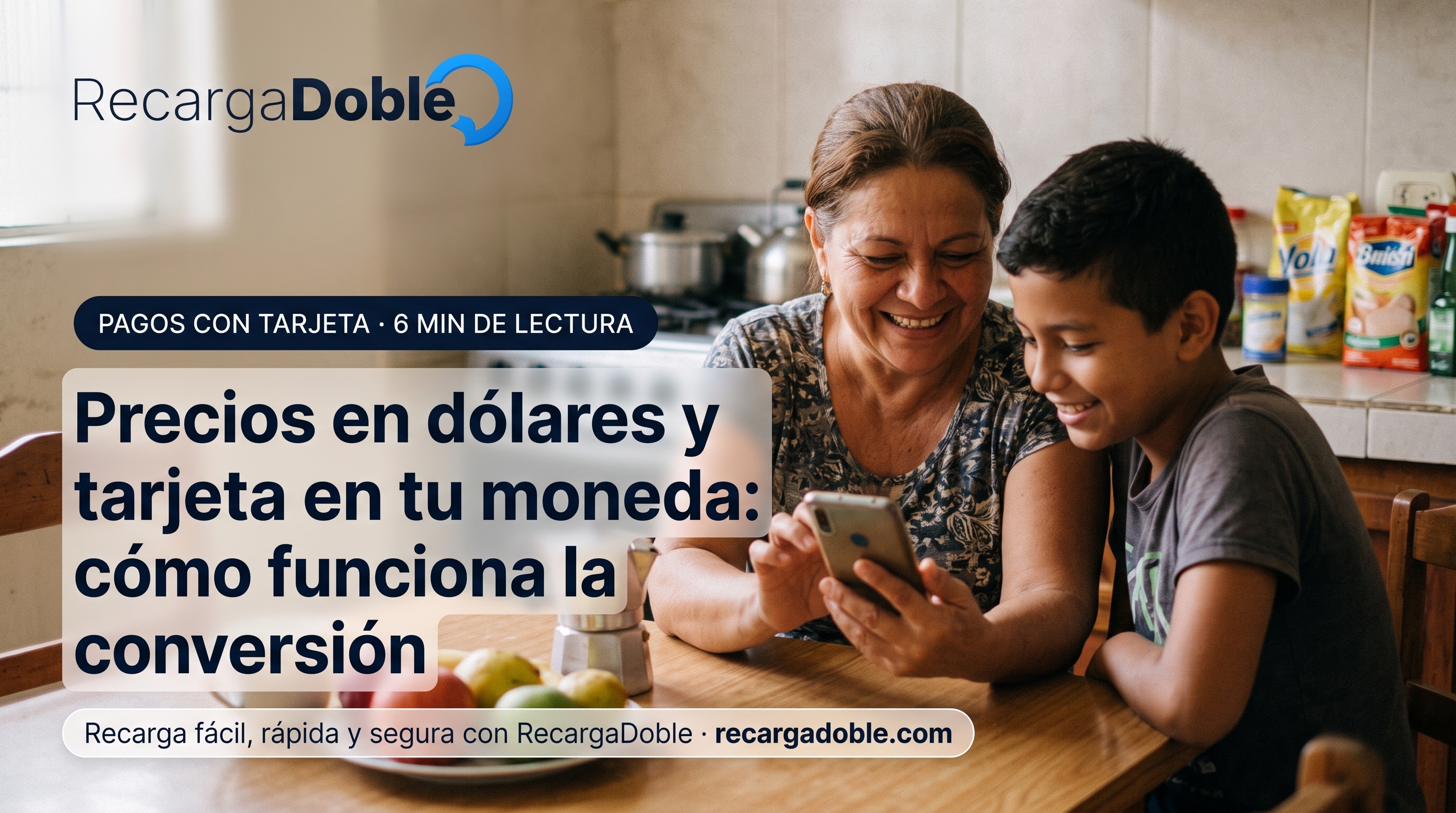
The charge travels in dollars and the conversion into Dominican peso (DOP) is done by your bank, not by the store. That is why the exact amount in your currency is not known until the issuer settles it.
Many local accounts offer a dollar card, and with that card the charge is not converted at all. If you are ever offered to be charged directly in your local currency, that conversion is done by an intermediary and is usually less favourable than your own bank's.
Three checks before paying
First, that the card has international online purchases enabled: in many banks that is a toggle in the app. Second, that the available limit covers the total, counting the conversion and any issuer fee.
Third, keep your phone at hand: many issuers ask for an in-app confirmation or a code to authorise the charge. The cardholder details must match the card; a name that does not line up is one of the most common causes of a decline.
If the charge does not go through
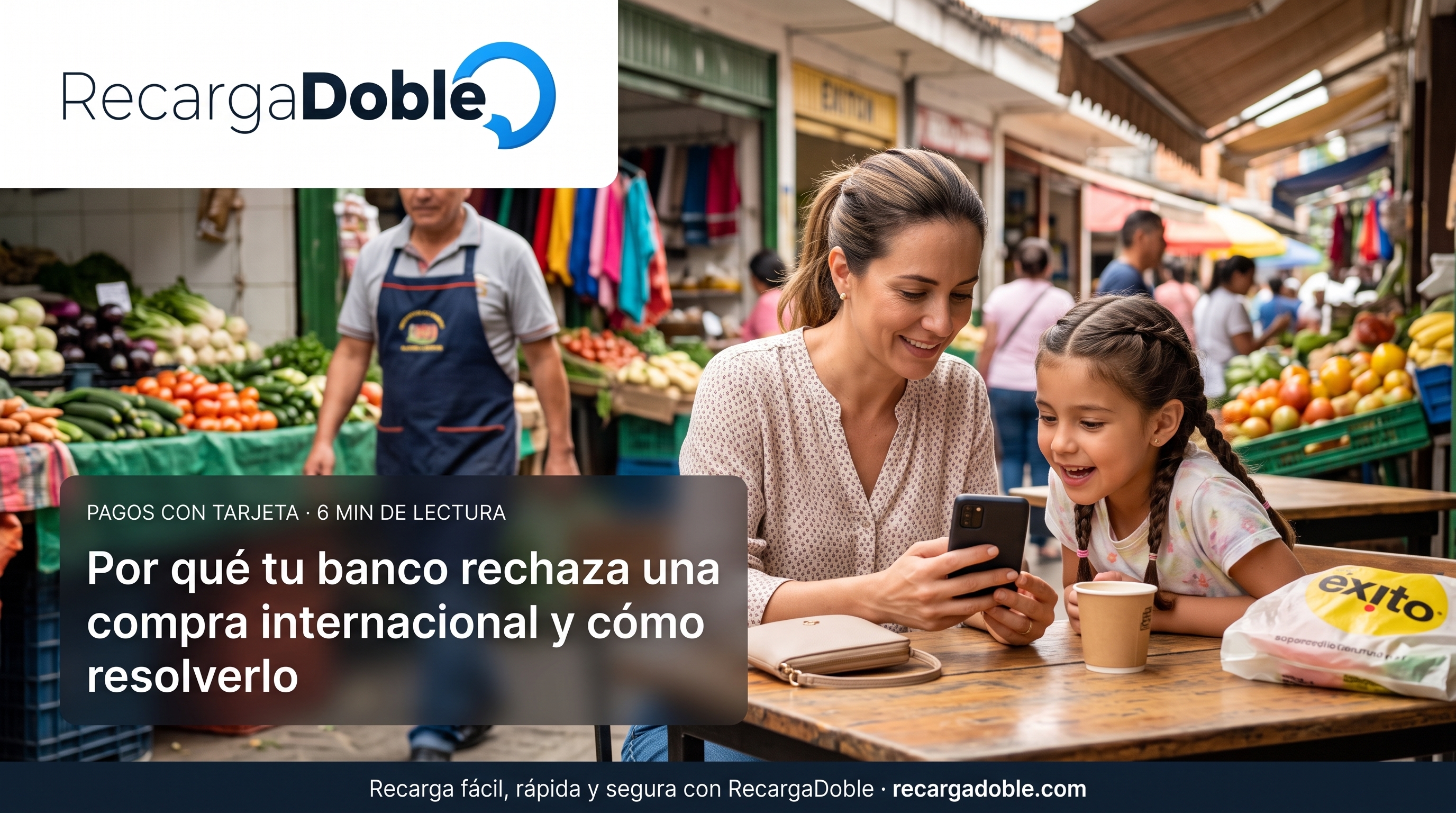
A decline almost never comes from the store: your bank decides it. Retrying five times in a row makes things worse, because the issuer reads that as suspicious activity and tightens the block.
The practical move is to call the bank or read the app notification, fix whatever blocked the charge and try once more. If it keeps happening, another payment method is always available: the order can be created again with the same details.
Who gets topped up from the Dominican Republic
The Dominican Republic shares an island with Haiti and hosts a large Haitian community, plus Venezuelans who arrived in recent years. Those are the most frequent destinations of top-ups paid from here.
The payment method and the recipient's country are independent decisions: you pay with your local card and top up whatever number you need within the available catalogue, whether next door or on the other side of the world.
After the payment
Most card orders are delivered right away. A small share sits in a security review for a few minutes: that is the step protecting the cardholder against unauthorised use, and the order page says so plainly instead of leaving you guessing.
Once the charge is confirmed you get the receipt with the order's public reference, which is what support works from. Keep it until the recipient confirms the balance arrived.
Final checklist before you send
Confirm the recipient number from a current source before paying. A saved contact can be outdated, copied with extra characters, or tied to a SIM the recipient no longer uses.
Review country and carrier together. A correct number with the wrong operator can fail or route incorrectly, especially when a family member has changed lines.
Choose the product for the recipient's next real need: flexible airtime for plan control, data when connectivity is the priority, and promotions only when the rules are clear.
Keep one checkout session open and wait for the final status before retrying. Multiple attempts can create duplicate payments or confusing pending states.
Save the receipt until the recipient confirms the balance or package. The transaction reference is the fastest path for support if the operator takes longer than expected.
Useful next steps
Article FAQs
Am I charged in dollars or in my currency?
The charge is made in dollars and your bank settles it in Dominican peso (DOP) at the rate it applies that day.
Does a debit card work?
Yes, as long as the issuer allows international online purchases. Some debit accounts ship with that option off by default and it is switched on in the app.
Can I pay with someone else's card?
It is not advisable. The cardholder details have to match the card; paying with a third party's card is exactly the pattern security reviews stop.
Which countries can I top up from the Dominican Republic?
The Dominican Republic shares an island with Haiti and hosts a large Haitian community, plus Venezuelans who arrived in recent years. Those are the most frequent destinations of top-ups paid from here. The full catalogue of countries and operators is available before you pay.
What if my bank keeps declining the charge?
You can pay with PayPal or with USDT without starting the order over. Many declines are solved simply by switching method.
About the author

Computer engineer and founder of RecargaDoble.com, writes about international mobile top-ups, mobile operators, telecommunications, and technology, combining his technical expertise with in-depth industry knowledge.
Related guides