Paying for top-ups with a debit or credit card: the complete guide
Which cards work, how the dollar charge is made, what the security review is, and why past orders make future ones stop waiting.
Which cards work
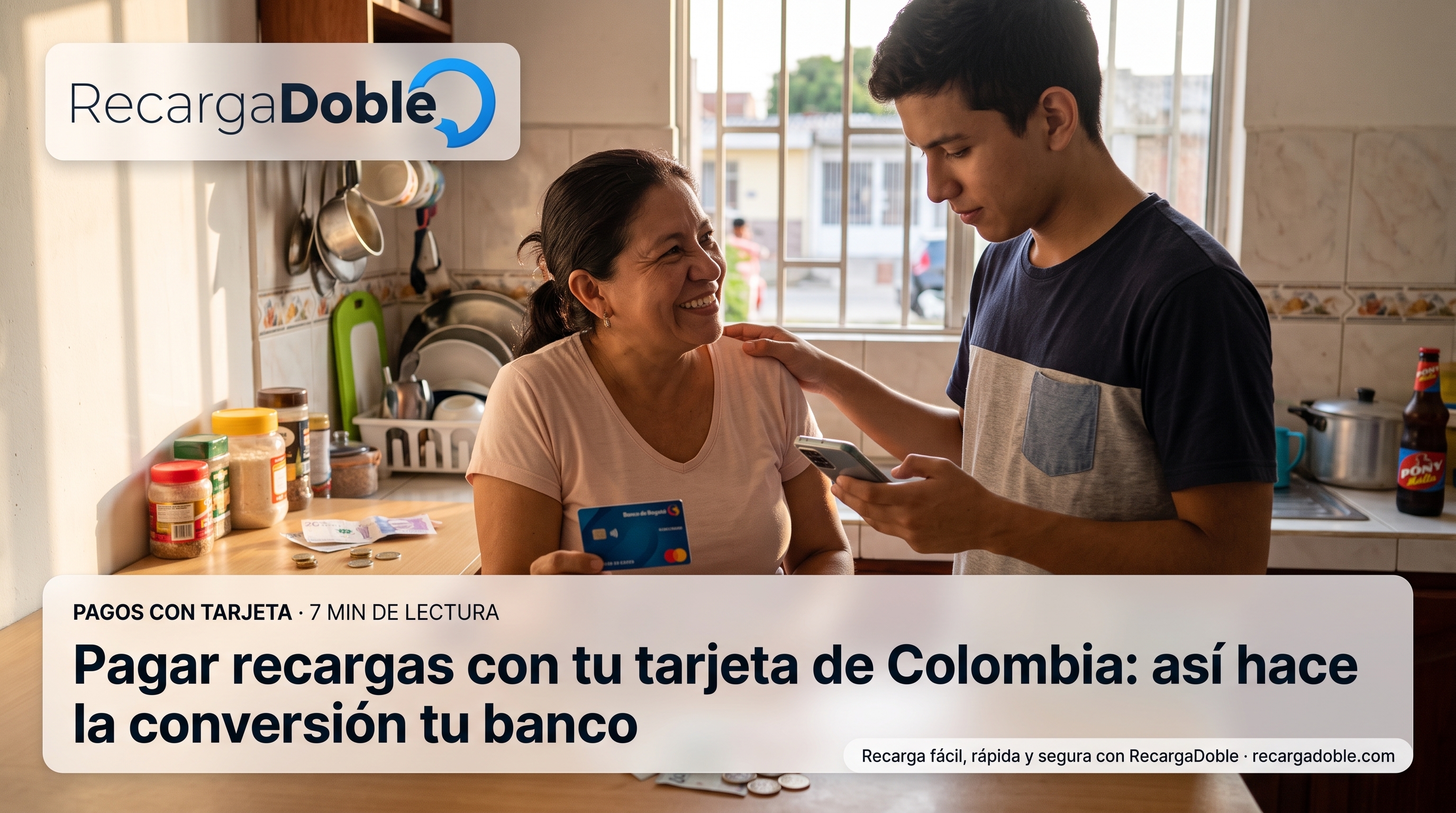
Any debit or credit card enabled for online purchases outside your country works, whatever currency it is issued in. The charge travels in dollars and your bank converts it to your currency when settling.
Prepaid and virtual cards usually work if they allow international purchases, but check the available balance first: a decline for insufficient funds looks like any other decline and confuses the picture.
How the charge appears on your statement
You will see a single dollar charge, converted into your currency by your issuer. The exact local-currency amount is unknown at payment time because the bank applies the rate when it settles, usually a day or two later.
If a site or browser offers to charge you directly in your currency, that conversion is done by an intermediary and is usually worse than your bank's. The general advice is to let your issuer convert.
The security review, explained plainly
A card payment can be reversed months later through a chargeback. So that a chargeback does not also mean a top-up given away to whoever used someone else's card, some orders are held while risk signals are checked.
It is not a punishment nor a personal suspicion: it mostly protects the cardholder. And it does not last forever: when the review ends the order moves on, and the order page states which stage it is in instead of showing an ambiguous status.
Why the second order usually goes faster
History counts. A buyer with previous orders completed without incident, or a card already used successfully, stops triggering the wait: the system recognises that history and approves delivery directly.
That recognition has deliberate limits: it does not cancel daily caps or certain serious signals. A clean history smooths things out, it does not open a back door.
When the card is not the way
There are situations where insisting with the card costs more than switching methods: banks that block international purchases by default, cards with no dollar limit, or an issuer that already flagged the attempt as suspicious.
In those cases PayPal or paying with USDT settles the same order without going through the issuer. The order can be created again with the same details: nothing you entered is lost to a decline.
Final checklist before you send
Confirm the recipient number from a current source before paying. A saved contact can be outdated, copied with extra characters, or tied to a SIM the recipient no longer uses.
Review country and carrier together. A correct number with the wrong operator can fail or route incorrectly, especially when a family member has changed lines.
Choose the product for the recipient's next real need: flexible airtime for plan control, data when connectivity is the priority, and promotions only when the rules are clear.
Keep one checkout session open and wait for the final status before retrying. Multiple attempts can create duplicate payments or confusing pending states.
Save the receipt until the recipient confirms the balance or package. The transaction reference is the fastest path for support if the operator takes longer than expected.
Useful next steps
Article FAQs
Can I use a card issued in another country?
Yes, as long as it is yours and its details match the cardholder. Paying with a third party's card is the pattern reviews stop, and rightly so.
Is my card stored?
Card details are handled by the payment processor, not by the store. If saving it for future orders is ever offered, that is an explicit choice of yours.
Why does my order say it is under review if I was already charged?
Because they are two different things: the charge completed and the delivery is waiting on a check. It is not a failed payment, and the order page distinguishes the two in those words.
Is there a fee for paying by card?
The total you see before confirming already includes any processing fee that applies. Whatever your bank charges for an international purchase is separate and decided by your issuer.
About the author

Computer engineer and founder of RecargaDoble.com, writes about international mobile top-ups, mobile operators, telecommunications, and technology, combining his technical expertise with in-depth industry knowledge.
Related guides